


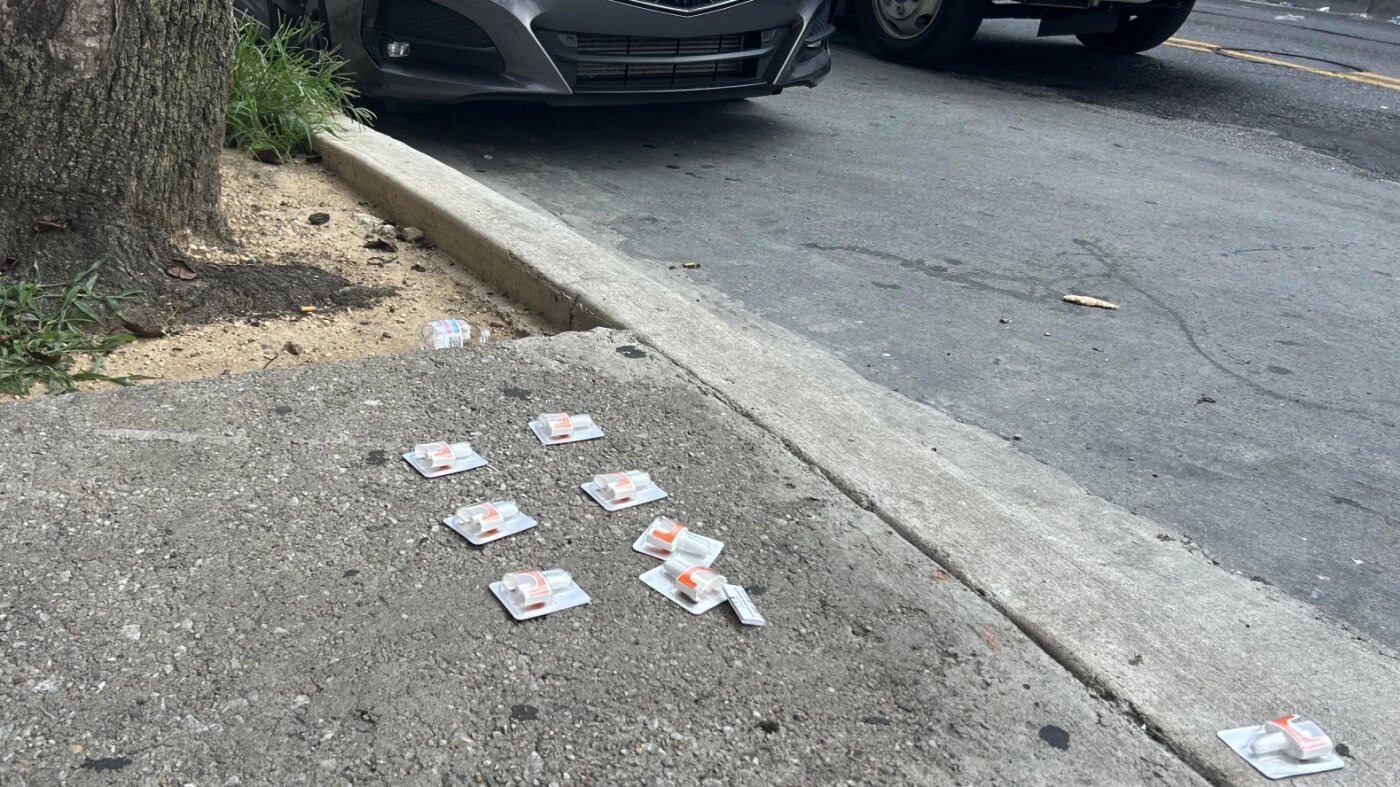
Last year, Baltimore had three mass overdose incidents in the span of three months in its Penn North neighborhood.In one incident, more than two dozen people were hospitalized after many were found unresponsive, lying in the streets or on sidewalks.No one died, but some came close.This story was produced in partnership with KFF Health News.Follow-up testing found that the street drugs contained high levels of N-methylclonazepam, a benzodiazepine that operates similarly to Xanax or Valium.
Like opioids, benzodiazepines suppress breathing.When they're combined, the risk of overdose goes up.
And benzodiazepines don't respond to opioid overdose reversal drugs.Afterward, the Baltimore Harm Reduction Coalition created test strips specifically for benzodiazepines.The group distributed them — along with test strips that identify other harmful adulterants, such as fentanyl, xylazine, and medetomidine — at clinics and neighborhood events.
The strips, available at no cost, can also be found in bars and spread out on street corners.People testing drugs mix a small amount with water and then dip a test strip into the liquid.
The strip will change color if it identifies an adulterant."Nobody really knows what they're getting whenever they're getting stuff off of the street," said Candy Kerr, a spokesperson for the coalition."Having the test strips available for the general public gives them the option to move slower if they're going to use whatever they're going to use."But a new federal policy could make it harder for organizations such as Kerr's to give out the test strips, and they're worried that overdoses could increase.
In late April, the Substance Abuse and Mental Health Services Administration banned the use of federal grants for distributing strips to the public and for some other harm reduction practices that have been credited with saving lives.Test strips have been used for nearly 10 years to identify adulterants.A letter sent to local health departments an...