


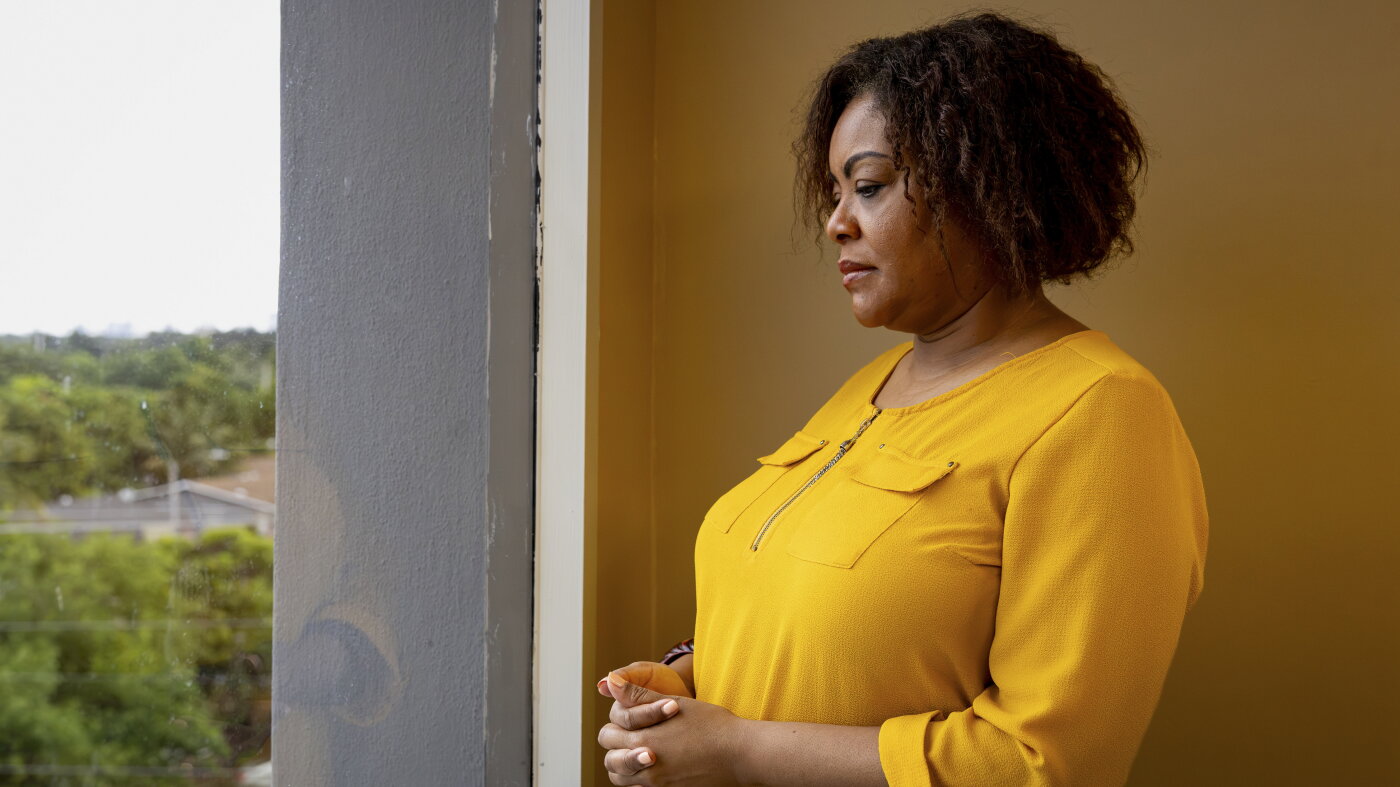
Herlain, who asked NPR to withhold her last name, poses for a portrait at her home in North Lauderdale, Fla.She is a registered nurse from Haiti who recently lost her temporary protected status, or TPS.
Eva Marie Uzcategui for NPR hide caption MIAMI — Herlain, a registered nurse who was born in Haiti, barely leaves her house these days.The few times she has, she was terrified.She instructed her family members about how to record on their phones in case she gets detained by federal immigration authorities."You would think I was on the run," she told NPR.
"Who am I on the run from? This is crazy!"Even at home she fears strangers and refused to open the door to a salesman who requested water on a humid Florida day during a recent heatwave."That's not me.I'm a nurse, I help people," she recounted through tears.Herlain, along with nearly 350,000 other Haitian migrants, lost her temporary protected status, or TPS, in July.
She asked NPR to only use her first name because of her immigration status.For 16 years, many Haitians living in the U.S.have been shielded from deportation due to TPS.
The designation allowed Haitians to live and work here legally, safe from the violence, instability and earthquakes that have torn apart their home country.But now, Haitian TPS holders are facing deportation after the Trump Administration revoked their protected status this summer.A Department of Homeland Security spokesperson defended the decision, in an emailed statement to NPR stating "Temporary Protected Status is exactly that — temporary.""For too long, TPS has been allowed to function as a de facto amnesty program despite Congress never intending it to be permanent," the agency wrote.Deportation to a deteriorating country A woman raises her hands in prayer during a St.Michel prayer gathering at Notre Dame d'Haiti Catholic Church on Wed...