


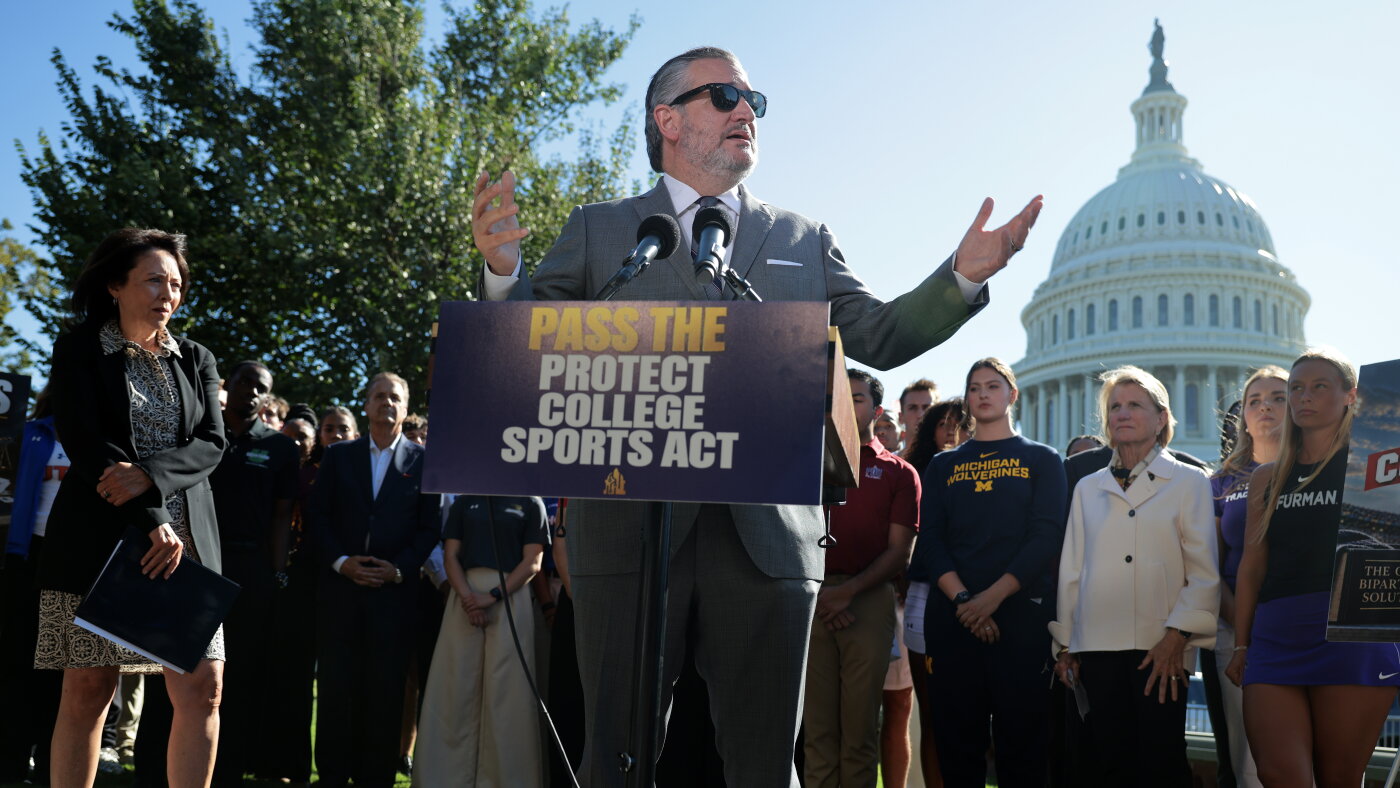
WASHINGTON — The Protect College Sports Act, a bill aiming to rein in what its supporters call a "Wild West" era of college athletics, cleared its most significant hurdle yet on Monday when the Senate passed it by a bipartisan vote of 77-22.The bill would grant the NCAA a limited antitrust exemption in order to restore its five-year eligibility rule and transfer limits.The legislation would also codify the regulation of name, image and likeness deals that have transformed college athletics in recent years by allowing athletes to be paid — some of them as much as millions of dollars per season.Among the bill's most vocal supporters are the NCAA itself, a long list of powerhouse schools and conferences and President Trump, who on Sept.
17 called for the bill's passage on Truth Social.Negotiations led by Sens.
Ted Cruz, R-Texas, and Maria Cantwell, D-Wash., lasted for more than a year and picked up co-sponsors from both parties along the way.Television commercials featuring the likes of Alabama great Nick Saban have peppered college football broadcasts this month, and Cruz appeared on ESPN's College GameDay to promote the bill."Right now, it is the Wild West.
The Protect College Sports Act is bipartisan legislation designed to bring order to the chaos," Cruz said at a news conference in mid-September.The legislation now moves to the House, which is on recess until after the November midterm elections.Its chances of passing are unclear.For roughly the past decade, a flood of litigation has chipped away at many long-standing rules governing college sports — from the tradition of amateurism to rules around transfers and who is eligible to compete at all."We're not turning back the clock, and whether you loved or hated the old system, we shouldn't try.
The problem is that college sports entered this new era without a stable framework to govern it," said Sen.Eric Schmitt, R-Mo., on the floor of the Senate on Monday before the vote.Opponents of the bill — from l...