


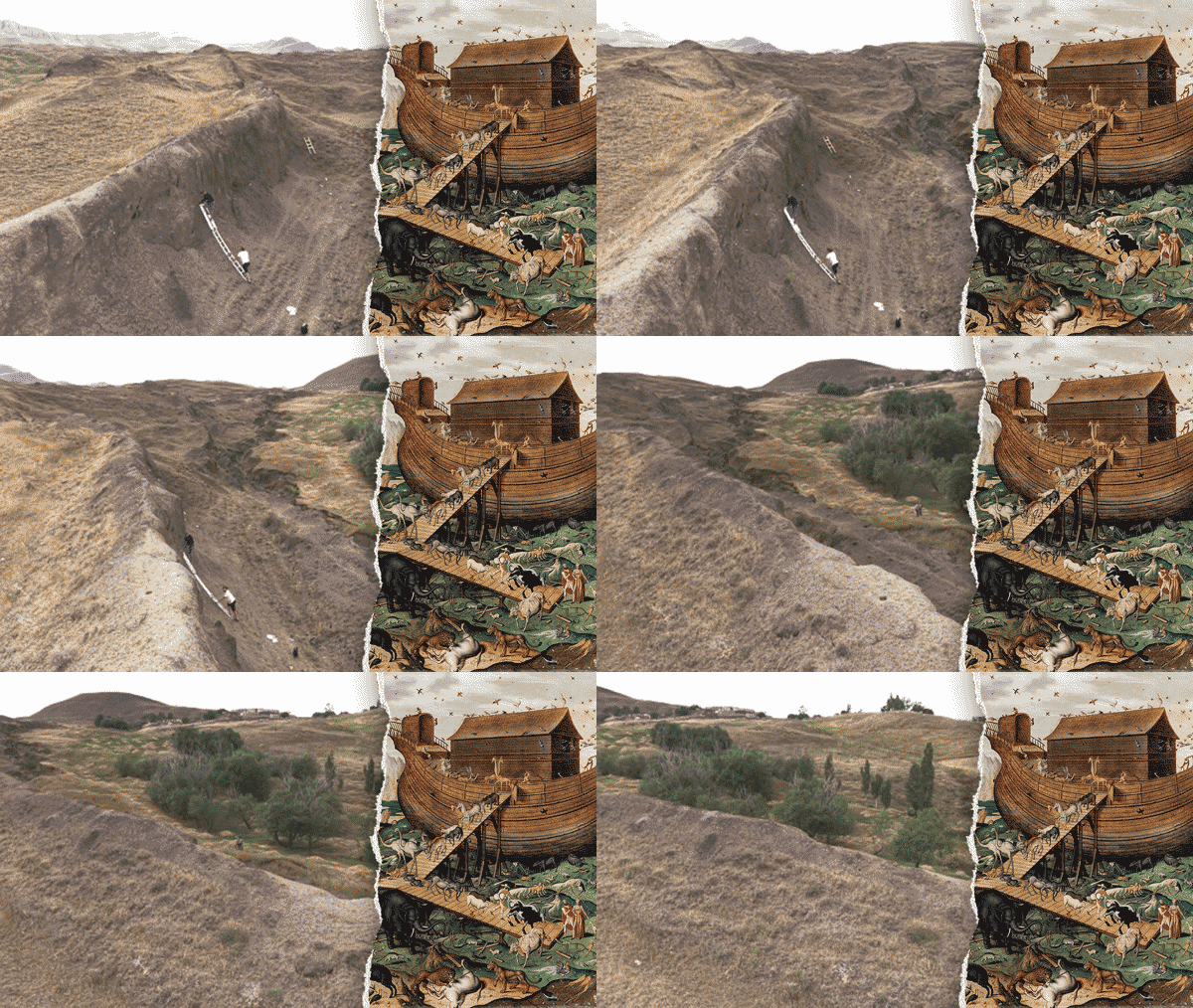
Researchers investigating the site believed by some to be Noah's Ark have just wrapped up their first full field season — drilling more than 60 feet beneath the site and collecting hundreds of samples now undergoing laboratory analysis.The Noah's Ark Research Project, supported by Ağrı İbrahim Çeçen University, has spent the last year collecting soil samples at the Durupınar site near Mount Ararat in eastern Turkey.First identified in 1959, the boat-shaped formation has long drawn speculation over a possible connection to Noah's Ark, though geologists have argued it is a natural formation.HOLY LAND DISCOVERY REVEALS ANCIENT CHARRED RELICS FROM ONE OF JERUSALEM'S DARKEST CHAPTERSIn a 1996 paper, geologists Lorence Gene Collins and David Franklin Fasold rejected claims that the formation was Noah's Ark, concluding instead that it was "a natural rock structure."But in the decades since, researchers have continued investigating the site, with a university-backed project now using deep-core drilling and other methods to probe beneath the formation.The Noah's Ark Research Project collected more than 300 soil samples from varying depths inside and outside the Durupınar formation.(NoahsArkScans.com; Fine Art Images/Heritage Images/Getty Images)During the latest field season, researchers collected over 300 soil samples from varying depths inside and outside the formation, Noah's Ark Research Project vice president Andrew Jones told Fox News Digital.The team also used deep-core drilling at the site for the first time, reaching depths of 20 meters, or more than 60 feet, in some locations — and obtaining samples from within the formation that were sent for lab analysis.ARCHAEOLOGISTS MAKE UNUSUAL FIND NEAR SITE WHERE ARK OF THE COVENANT WAS ONCE KEPT"That's what we'll be testing this winter," Jones said.
"Just to see if we can find any type of manmade activity or something that suggests decayed wood."The researchers hope the analysis will help determine whether ther...